Frequently Asked Questions
This section is updated regularly with new questions and answers about the RIGS Energy Atlantic grid support project. If you have a question that is not included here, please submit it using the form at the bottom of this page or by contacting us at info@RIGSEnergyAtlantic.ca
Questions & Answers – August 2026
Project Overview
What is RIGS?
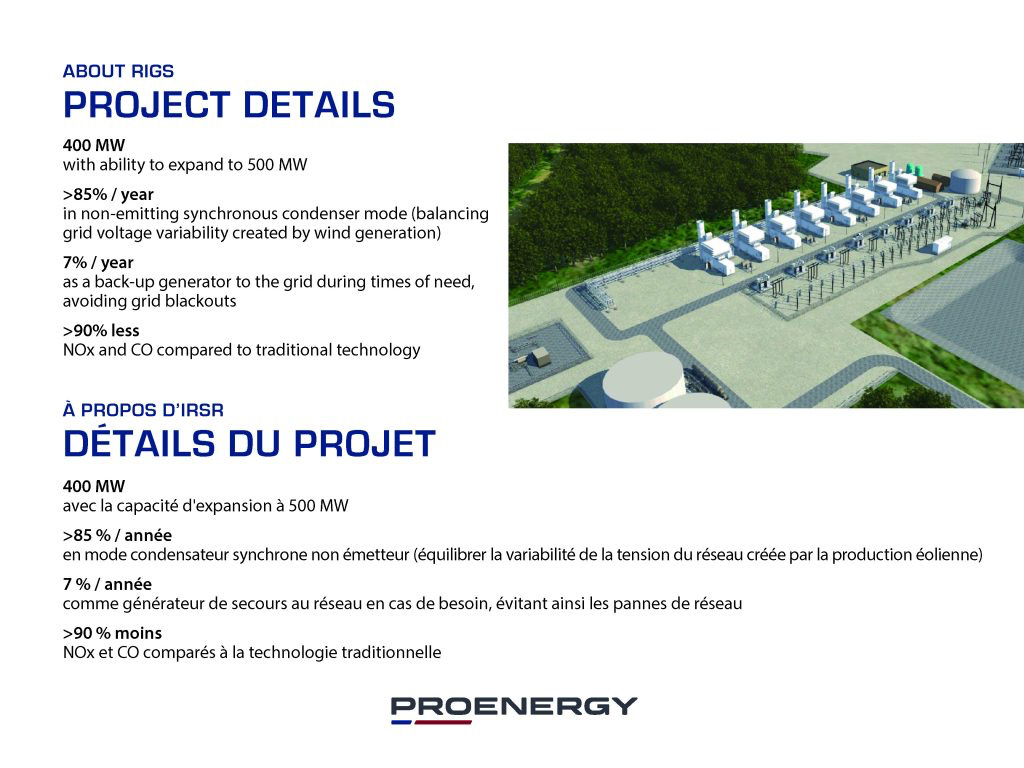
The RIGS (Renewables Integration Grid Security) Energy Atlantic project is a grid support and dispatchable power generation solution for New Brunswick. Developed by PROENERGY, this facility will help to meet growing energy demand while transitioning toward a net-zero electric grid. It will provide innovative grid-stabilizing technology and up to 500 MW of essential backup support for wind and solar energy. It will use aeroderivative turbines paired with advanced synchronous condensing technology. This technology serves as a ‘shock absorber’ for the electricity grid – smoothing the effects of sudden changes in wind and solar generation output. The facility is expected to begin operation in late 2028.
What is synchronous condensing technology, and why is it included in the RIGS project?
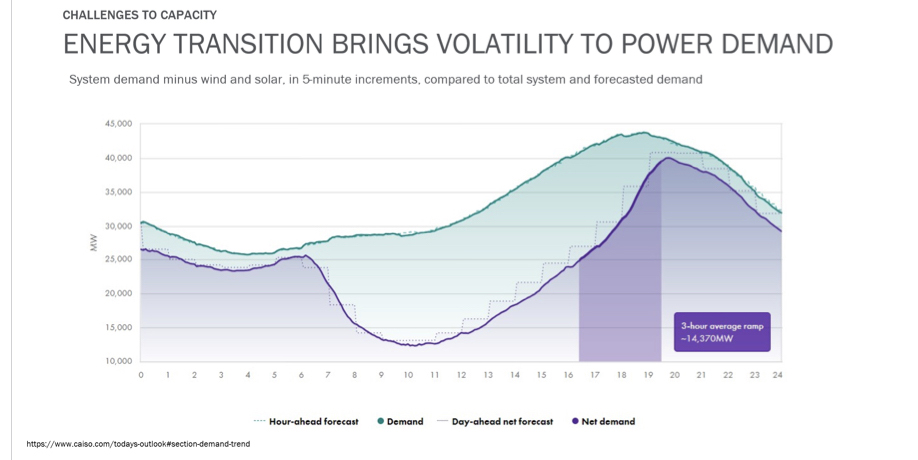
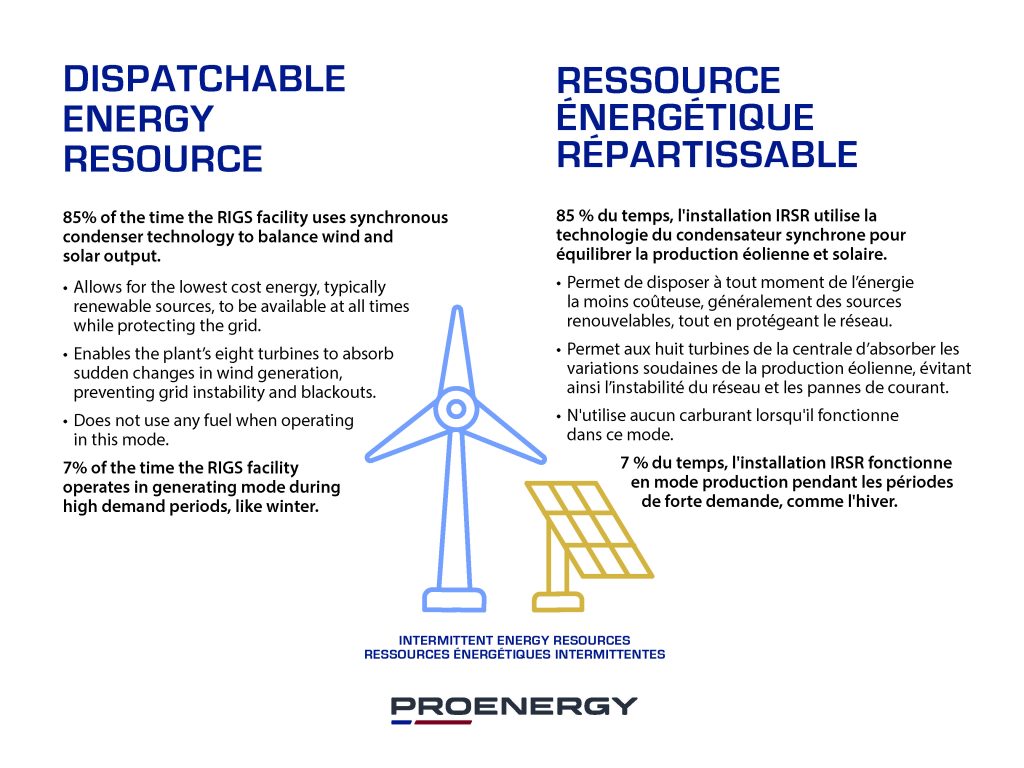
Synchronous condensers are like ‘shock absorbers’ that enable the turbines at the RIGS Energy Atlantic grid support facility to absorb sudden changes in wind generation without using natural gas. This prevents grid instability and blackouts. It also allows for the lowest cost energy – typically renewable sources – to be available at all times while protecting the grid.
Once completed, the RIGS Energy Atlantic grid support facility is expected to operate without fuel 85% of the time to balance the grid using synchronous condensing technologies. The facility will be used to generate electricity using natural gas about 7% of the time. The remainder of the time the facility will be on standby.
Energy demand is becoming increasingly volatile as we add more renewables to the grid. Traditional baseload power plants struggle with this cycling demand and, while batteries are part of the solution, they’re not sufficient on their own.
Why was this location selected?
The project site is strategically located in Westmorland County, capitalizing on availability of existing natural gas supply and power transmission infrastructure. Of all potential locations evaluated, this site was found to have the lowest overall environmental impact while meeting the technical requirements for the project.
Which individuals and organizations have you met with to discuss plans for this project?
Engagement with rightsholders, stakeholders and the public is an essential component of the RIGS Energy Atlantic grid support project and will continue to be a core aspect of the project proponent’s efforts from the project development phase through commercial operations. Many meetings and discussions have already taken place, and there will be many more to come in the days and weeks ahead as the project progresses. Public open houses also took place in Tantramar on August 12 and 13, 2025.
The project team looks forward to continuing conversations with and answering questions from groups and individuals with an interest in the planned project site and facility. Anyone wishing to connect with the team directly can reach out to us at info@RIGSEnergyAtlantic.ca.
Who is developing this project?
The RIGS Energy Atlantic grid support facility is being developed by PROENERGY, a proven industry leader.
Why is this project necessary?
New Brunswick’s power demand is rising. Extreme weather, growing population and increasing renewables integration are creating new stresses on the electricity grid. The RIGS Energy Atlantic grid support facility will provide the backup and flexibility the grid needs to make the most of wind and solar energy, while reducing New Brunswick’s reliance on electricity generated using coal and oil. It’s a key part of the journey to a cleaner, more secure energy future.
The RIGS Energy Atlantic grid support facility will:
- Balance the grid with advanced technologies that absorb sudden changes in wind power output
- Provide up to 500 MW of dispatchable backup power during peak demand or low renewable output
- Support New Brunswick’s journey to net-zero
- Enable faster adoption of low-cost renewables
This facility will serve as a grid support safety net for New Brunswick. It will provide support for renewables by serving as a ‘shock absorber’ for the electricity grid – smoothing the effects of sudden changes in wind and solar generation output. It will operate in this mode, without using any fuel, approximately 85 per cent of the time. The RIGS Energy Atlantic grid support facility can provide fast-start generation support when demand exceeds supply in New Brunswick. It will operate in this mode, using fuel, approximately 7 per cent of the time.
This information panel was shared during public open houses held in Tantramar.
When will the facility be operational?
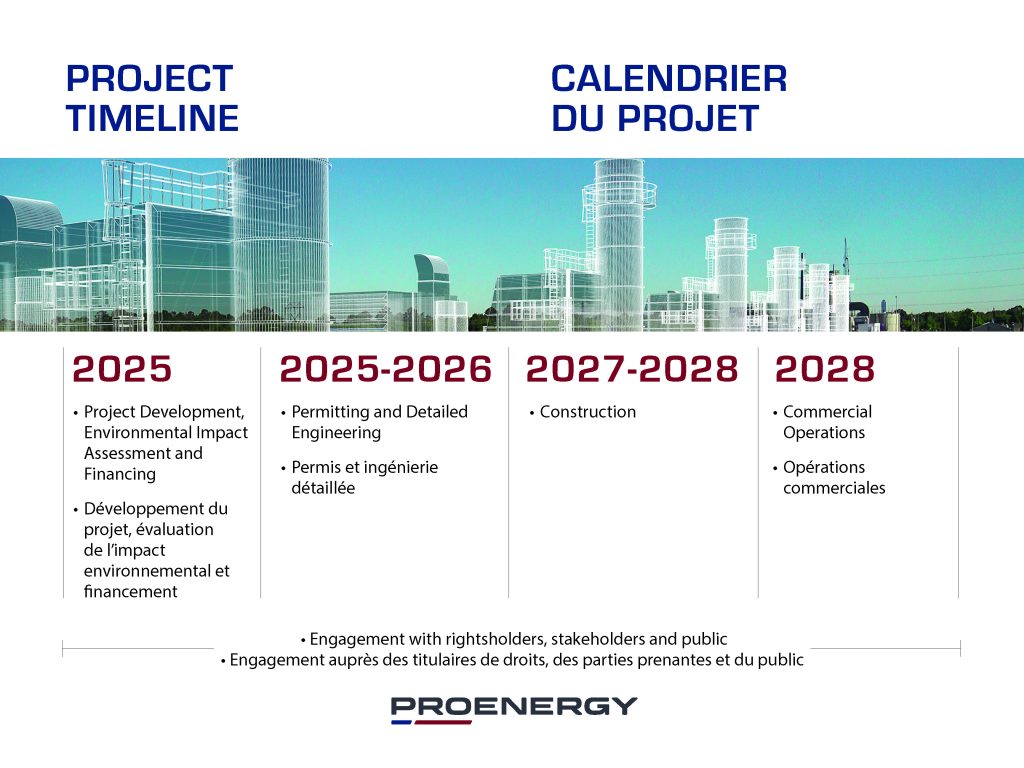
The project timeline for the RIGS Energy Atlantic grid support facility is:
- 2025 to 2050: Engagement with rightsholders, stakeholders and the public
- 2025: Project development, Environmental Impact Assessment and Financing
- 2025 to 2026: Permitting and Detailed Engineering
- 2027 to 2028: Construction
- 2028: Commercial Operations
This information panel was shared during public open houses held in Tantramar.
What regulatory approvals is this project subject to?
The Environmental Impact Assessment registration with the New Brunswick Department of Environment and Local Government for this project is available here. The Initial Project Description for the RIGS Energy Atlantic grid support facility is also registered with the Impact Assessment Agency of Canada. Information about the Impact Assessment Process for the Centre Village Renewables Integration and Grid Security Project is available here.
What will your approach be to emergency response planning?
Safety is a top priority for PROENERGY and robust emergency response planning and preparation is a core part of our approach to all projects, including the RIGS Energy Atlantic grid support facility. Our team is actively engaging with local emergency responders and will continue to do so throughout project planning, development and operations.
Environmental Impact
Why consider natural gas power generation?
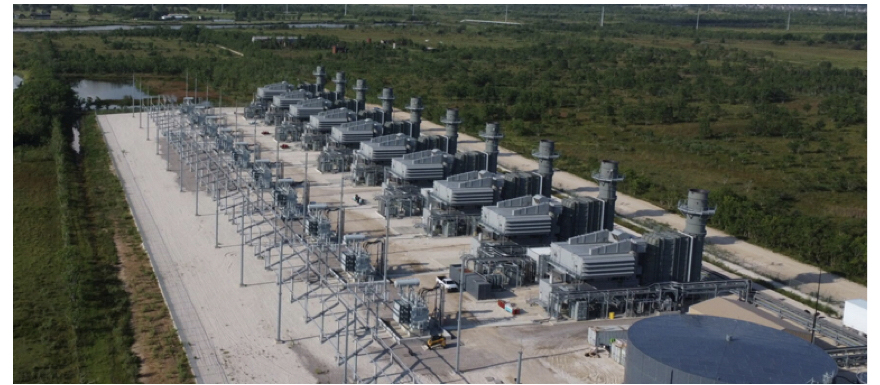
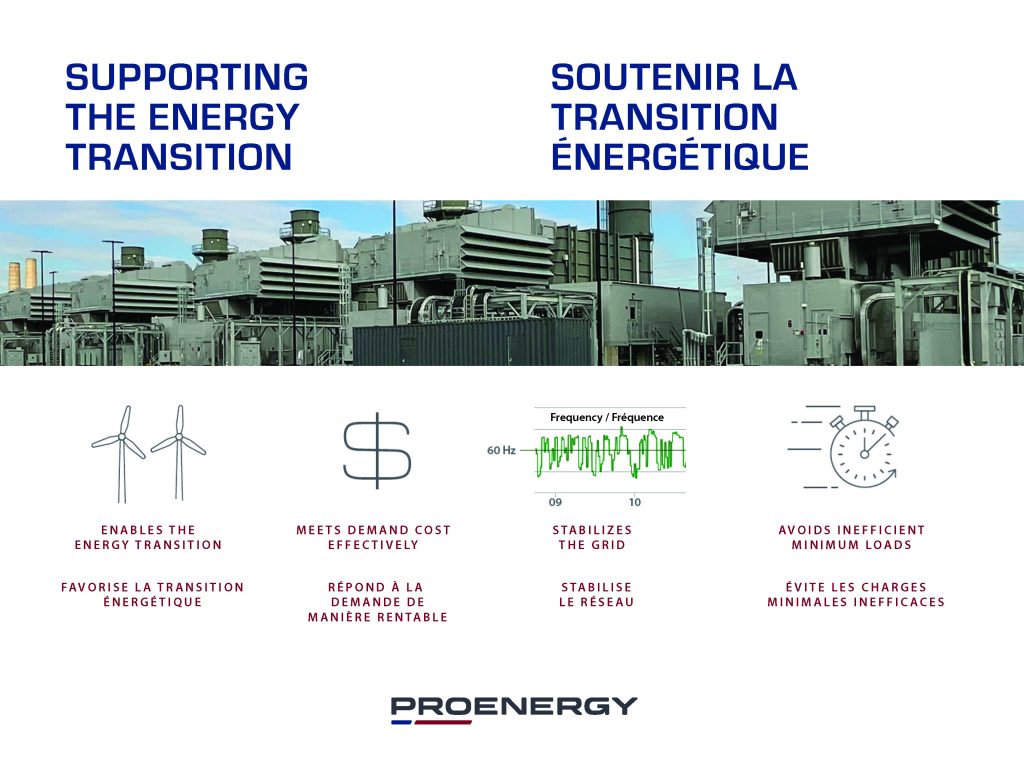
Natural gas power generation can play a key part in the supporting the energy transition. As the world retires coal-fired plants and installs more wind and solar generation, communities need backup power generation to meet gaps in energy supply. PROENERGY focuses on supporting renewable energy and system reliability. Right now, the best solution is efficient natural gas generating units combined with state-of-the-art emissions-reducing equipment and synchronous condensing technology like what is planned for the RIGS Energy Atlantic grid support facility.
PROENERGY’s Topaz Power Station is shown here while actively generating electricity using natural gas. This facility is much like the RIGS Energy Atlantic grid support facility being proposed for Centre Village, NB
How will the project impact the environment?
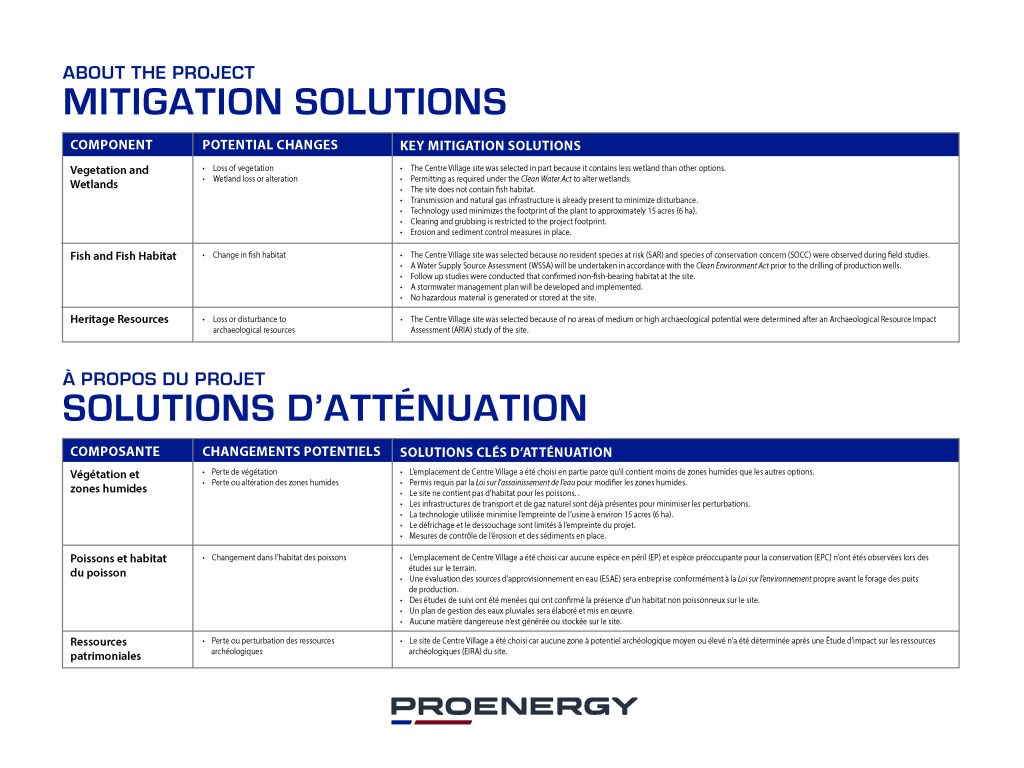
The RIGS Energy Atlantic grid support facility will help decrease greenhouse gas emissions by supporting the transition away from coal and oil and enabling broader use of renewable sources like wind and solar. It will use technology that reduces nitrous oxide and carbon monoxide emissions associated with coal-fired generation by 90% and 95% over traditional generating technologies, respectively. It will meet or exceed all provincial and federal regulations. It will have no measurable noise impact and will discharge no polluted water.
These information panels were shared during public open houses held in Tantramar.
How much water will this facility use and how will local wells be affected?
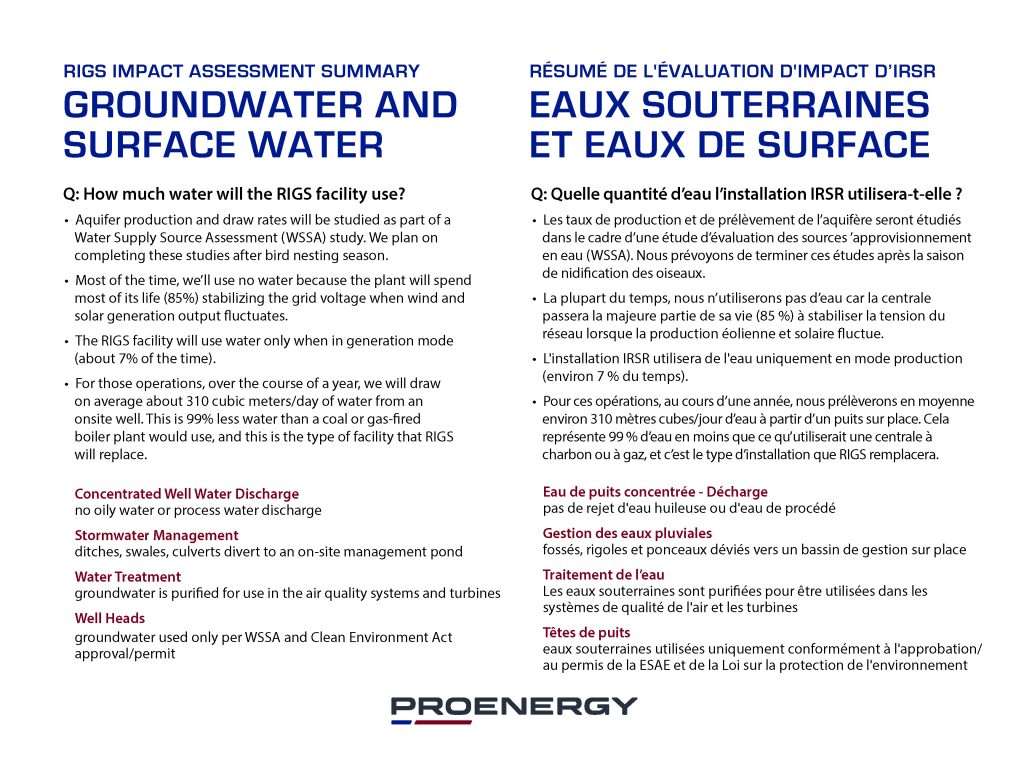
Our design relies on a sustainable groundwater source supported by an active hydrogeological study. This helps to ensure long-term supply without depleting local wells. Estimated average usage is managed carefully. More importantly, every drop is treated and optimized for efficiency. We use filtration, reverse osmosis and advanced purification so that only the cleanest water enters the turbine systems, maximizing performance and minimizing waste or contamination. Water only enters the turbines during the 7% of the time when the plant is generating electricity.
This information panel was shared during public open houses held in Tantramar.
What is discharged from the plant, and how might it impact fish and local wells?
Our water treatment system is designed to prevent ecological harm. Any reject water (from filtration or deionization) is handled under strict environmental protocols. We aim for zero negative impact on local water tables or aquatic ecosystems. This aligns with PROENERGY’s sustainability commitment to responsible care of water resources.
Will this project increase GHG emissions for the province?
The technology the RIGS Energy Atlantic grid support facility will use is efficient and sustainable and will ultimately reduce emissions produced to generate electricity in New Brunswick. It will replace the need to operate existing resources with higher emissions, such as coal or oil-fired generating stations. It will also enable the use of more renewables by stabilizing the grid by absorbing sudden changes in wind or solar generation without using natural gas. Using this facility will result in a substantial net reduction in CO2 for the province, equal to removing 106 million litres of gasoline from cars on the road. The RIGS facility also uses advanced catalyst technology that reduces nitrous oxide and carbon monoxide emissions by 90% and 95%, respectively, compared to traditional gas turbine technology in Canada.
What is the source of the natural gas for this project?
Natural gas for the RIGS Energy Atlantic grid support facility will be delivered by the Maritimes & Northeast gas transmission pipeline, which has been in operation in our region since 2000. This pipeline borders the RIGS Energy Atlantic site. Per MN&P, the source of the natural gas in the pipeline is North American-supplied.
Will the project impact wildlife?
When people envision a power plant, they think of black smoke and large industrial site.
The RIGS Energy Atlantic grid support facility will:
- have a minimal footprint
- have significantly lower emissions than what is produced when generating electricity using coal or oil
- be about as noisy as a vacuum cleaner.
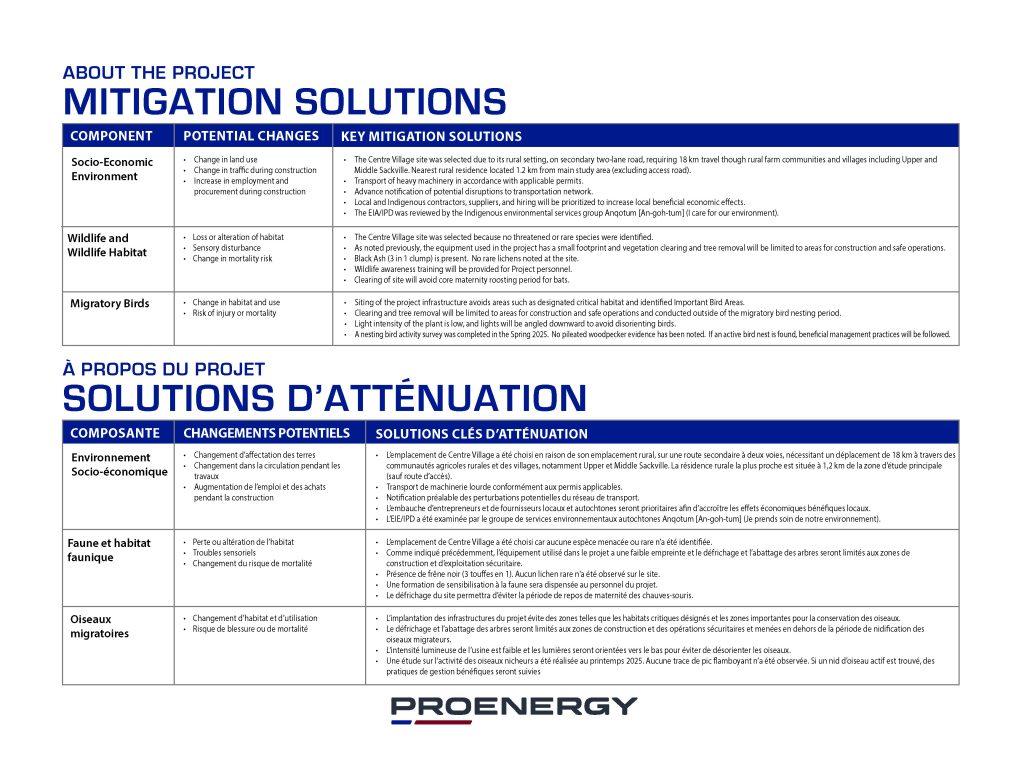
Environmental experts spent months in the field studying wildlife and wildlife habitat, migratory birds, vegetation and wetlands, fish habitat and watercourses. These initial findings were published in the Environmental Impact Assessment for the project. As a normal part of the process, additional studies are being completed, and an amended EIA will be submitted when they are done.
These information panels were shared during public open houses held in Tantramar.
How noisy will this facility be?
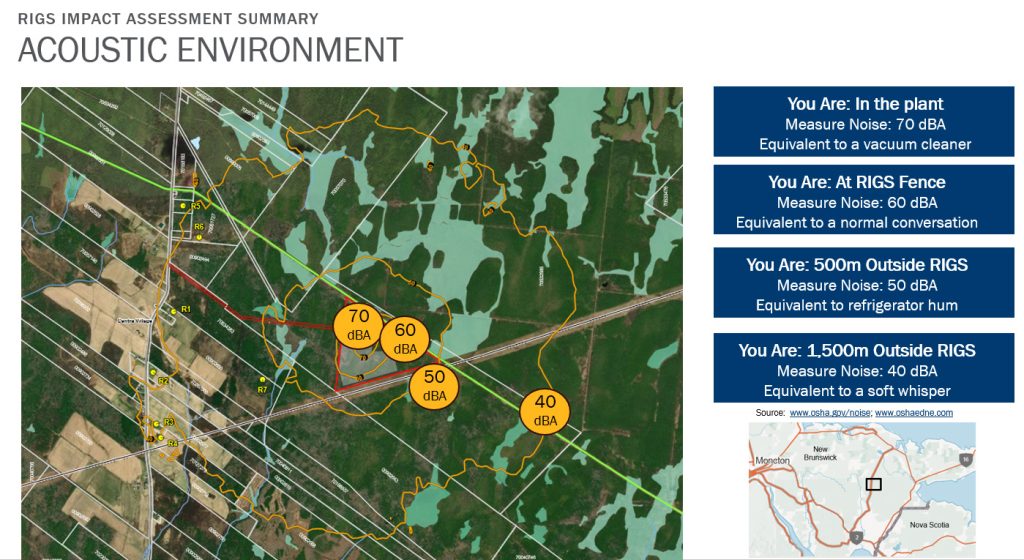
The RIGS Energy Atlantic grid support facility will have no measurable noise impact. The illustration below shows the level of noise associated with the RIGS facility, depending on how close you are to the site.
Socio-Economic and Community Considerations
Will this project raise electricity prices?
The RIGS Energy Atlantic grid support facility will help control energy costs by reducing the reliance on expensive imported electricity and coal and oil-fired generation. It enables integrating more renewables and managing the grid more efficiently and reliably.
How does this project support energy security?
The RIGS Energy Atlantic grid support facility will give New Brunswick more control over its energy supply. It will make the province’s electricity grid more resilient and able to accommodate high demand, extreme weather, intermittent renewables and energy market volatility. .
This information panel was shared during public open houses held in Tantramar.
How does this technology support renewables?
Wind and solar resources are intermittent, meaning they don’t generate electricity when the wind doesn’t blow or the sun doesn’t shine. The RIGS Energy Atlantic grid support facility will use synchronous condensing technology to stabilize the grid. This technology serves as a ‘shock absorber’ for the electricity grid – smoothing the effects of sudden changes in wind and solar generation output. The facility will also act as a safety net by offering fast-start, dispatchable electricity in times of high demand.
Batteries can serve the same function, so why not use grid-scale batteries instead?
Grid-scale batteries are not the best solution in this case for three reasons:
- Battery technology has not advanced to the efficiency, durability and reliability of the technology being used at the RIGS Energy Atlantic grid support facility. It’s more costly in terms of price, operations, and space.
- Batteries cannot provide the grid support safety net that New Brunswick needs right now. The RIGS Energy Atlantic grid support facility will provide important support for renewables by serving as a ‘shock absorber’ for the electricity grid – smoothing the effects of sudden changes in wind and solar generation output.
- Batteries cannot provide fast-start generation support for several days, such as a period of very cold weather when electricity demand could exceed supply in New Brunswick.
Project Proponent
Who is PROENERGY?
PROENERGY provides a global energy transition platform focused on fast-start, dispatchable power generation and grid-balancing technology that enables the use of more energy from renewable sources. The company has provided solutions like the RIGS Energy Atlantic grid support facility for more than 20 years and has operational experience on every continent.
Why is PROENERGY a candidate for this project?
PROENERGY specializes in grid-supporting technology like the RIGS Energy Atlantic facility. Founded in 2002, PROENERGY has evolved to meet the changing demands of the electricity industry for a reduced-carbon future. The company’s sole focus is aeroderivative gas turbines, which are proven as a backup technology to support wind and solar developments.
How many power plants like this has PROENERGY built?
PROENERGY has built many plants of a similar design to the RIGS Energy Atlantic grid support facility and installed more than 95 aeroderivative gas turbines for customers. In the past four years alone, PROENERGY has built seven power-generation facilities that produce nearly 2,500 MW, or enough to power a mid-size city.